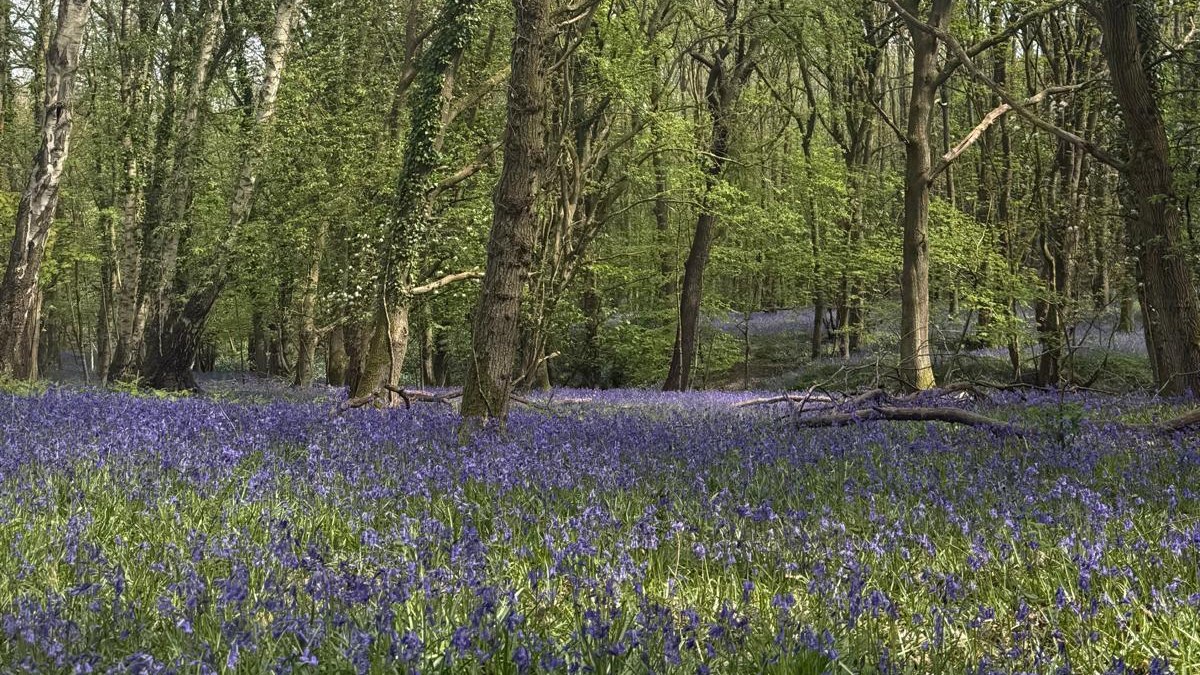
If most of your day is spent indoors, moving between a desk, a car and a screen, and a walk in the park is something you’ll get to at the weekend if there’s time, you’re not unusual. Most of us live this way.
But time outdoors isn’t only a pleasant extra.
One of the things we hear often in clinic is some version of “I know I should get outside more, but there’s never time.” It’s usually said as though it were a luxury, something to fit in once the important things are done.
Regular time in natural environments has measurable effects on the body. It belongs alongside sleep, movement and nutrition, not after them.
Nature is a physiological exposure, not just a pleasant one
Most people think of time outdoors in terms of mood: it feels good, it clears the head. That’s true. But in the research, nature exposure also produces concrete changes in stress hormones, the nervous system, immune function and attention.
Importantly, these effects aren’t only explained by the exercise involved. Studies comparing walks of the same length in natural and urban settings still find differences. The setting itself matters.
Three ways nature shows up in the body
The stress response
This is the most consistent finding. Studies measuring cortisol, heart rate and blood pressure before and after time in natural versus urban environments show meaningful differences in favour of nature.
Japanese research on Shinrin-yoku, or forest bathing (walking slowly through woodland), has looked at this in detail. Time among trees is associated with lower salivary cortisol, reduced sympathetic (fight or flight) activity and increased parasympathetic (rest and digest) activity.
It doesn’t take long. One US study found that 20 to 30 minutes in a natural setting produced the greatest fall in cortisol for the time invested.
Immune function
Trees and plants release compounds called phytoncides as part of their own defence system. In small Japanese studies, time in forests was associated with increased activity of natural killer (NK) cells. These are immune cells that identify and destroy virus-infected and abnormal cells.
In one study, that increase lasted at least a week after a three-day forest trip. These studies were small and involved healthy adults, so they don’t tell us about disease outcomes. But they suggest the effects of nature go beyond how we feel.
Attention and mental recovery
Most working days rely on directed attention: focused, effortful thinking that tires with use.
Attention Restoration Theory, developed by Rachel and Stephen Kaplan, proposes that natural environments allow this system to recover. Urban settings make constant demands, such as traffic, noise, signs and screens. Natural settings hold our interest more gently, which the Kaplans called “soft fascination”, and give directed attention a chance to rest.
Studies show improvements in some measures of attention and working memory after time in nature. The size of the effect varies, but the direction is consistent.
There is more beyond green space. A growing body of research looks at blue space: coastlines, rivers, lakes and canals. The evidence is at an earlier stage, but it points the same way. The benefit isn’t limited to woodland.
How much do you actually need?
A study of nearly 20,000 people in England found that those who spent at least 120 minutes a week in nature were significantly more likely to report good health and wellbeing. It didn’t matter whether that came in one long visit or several short ones.
So the target is around two hours a week, in whatever pattern fits your life.
Making it a habit, not a treat
Twenty minutes outside, three times a week
This is the minimum to aim for. It doesn’t require countryside. A park, a canal path or a quiet tree-lined street will do.
Away from heavy traffic, and ideally without your phone. Walking or sitting both count. The setting is what matters.
Take your lunch break outside
This is the simplest structural change most people can make.
Twenty minutes outdoors at lunch gives you nature exposure and a proper break from screen-based work. If you walk, it also helps with blood glucose control after your meal. Three benefits from one habit.
The barrier is usually permission: the sense that you shouldn’t leave your desk. The evidence suggests you should.
One longer nature exposure a month
The research on immune function and deeper stress recovery points to the value of occasional longer periods outdoors: two to four hours or more.
It doesn’t need to be remote or demanding. A countryside walk, a morning at the coast or an afternoon in a large park all count.
Think of it as a monthly reset.
“I live in a city and don’t have easy access to green space – is what I can get to still worth it?”
Yes. Much of the writing on nature and health can feel as though it’s aimed at people with countryside on the doorstep. The research on urban green space is reassuring: small parks, tree-lined streets and canal towpaths all show benefit compared with built-up areas that have no greenery.
Where you live matters too. Dutch research found lower rates of anxiety and depression in people with more green space within a kilometre of home. UK data suggest that health inequalities linked to income are narrower in greener areas.
If green space is limited, look for water – rivers, canals and reservoirs.
Use what you can get to. It all counts.
The bigger picture
Humans evolved in natural environments and spent almost all of their history in them. It shouldn’t be surprising that removing ourselves from them has physiological costs, or that returning to them, briefly and regularly, has benefits.
Of all the changes we discuss in clinic, this is one of the cheapest and most accessible. It supports stress, sleep, mood and metabolic health at the same time.
If you’d like to explore any of this in the context of your own health, we offer consultations designed to look at the whole picture. You can book a free, no-pressure discovery call with either of us.
Dr Helen Kay and Dr Greta Gregory are GPs and lifestyle medicine physicians, and the co-founders of The Lifestyle GP.
This article is for general information and does not replace individual medical advice.
References
- Park BJ et al. The physiological effects of Shinrin-yoku (taking in the forest atmosphere or forest bathing). Environmental Health and Preventive Medicine. 2010;15:18-26.
- Hunter MR et al. Urban nature experiences reduce stress in the context of daily life based on salivary biomarkers. Frontiers in Psychology. 2019;10:722.
- Li Q et al. Visiting a forest, but not a city, increases human natural killer activity and expression of anti-cancer proteins. International Journal of Immunopathology and Pharmacology. 2008;21:117-127.
- Li Q et al. Effect of phytoncide from trees on human natural killer cell function. International Journal of Immunopathology and Pharmacology. 2009;22:951-959.
- Kaplan S. The restorative benefits of nature: toward an integrative framework. Journal of Environmental Psychology. 1995;15:169-182.
- Ohly H et al. Attention Restoration Theory: a systematic review of the attention restoration potential of exposure to natural environments. Journal of Toxicology and Environmental Health, Part B. 2016;19:305-343.
- White MP et al. Spending at least 120 minutes a week in nature is associated with good health and wellbeing. Scientific Reports. 2019;9:7730.
- Gascon M et al. Outdoor blue spaces, human health and well-being: a systematic review of quantitative studies. International Journal of Hygiene and Environmental Health. 2017;220:1207-1221.
- Maas J et al. Morbidity is related to a green living environment. Journal of Epidemiology and Community Health. 2009;63:967-973.
- Mitchell R, Popham F. Effect of exposure to natural environment on health inequalities: an observational population study. The Lancet. 2008;372:1655-1660.